Books We Like the Looks Of: New Releases in July 2026
This month, in the midst of deodorant-testing heat and confused displays of patriotism, we bring you an all-fiction batch of July books, including Colson Whitehead's appealingly named Cool Machine.

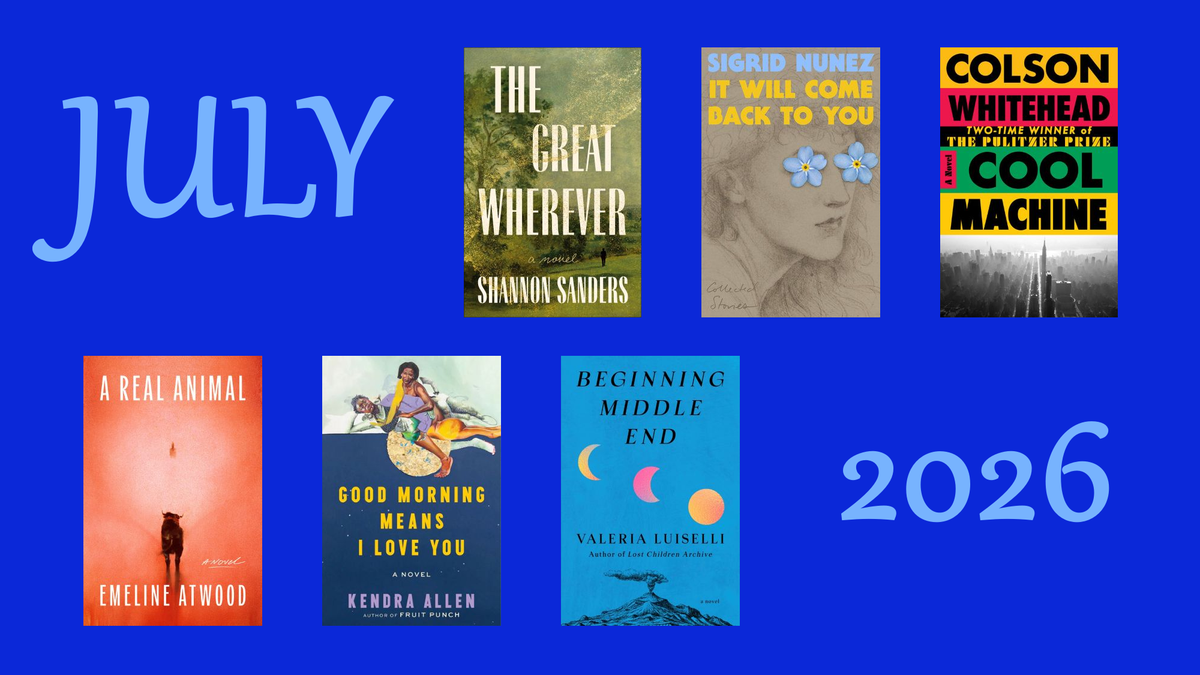
Pride Month is over. Or has it just begun? Nope, it's over, but our recent list of QTBIPOC-authored books is certainly still relevant and we encourage you to check it out if you haven't already. At a time when we continue to be pressured towards compromise by the same white liberalism that has failed us, we think it remains vital to look not in that direction but to other ways of being, and in the wake of the recent Supreme Court rulings, we stand with trans people and immigrant communities. This month, in the midst of deodorant-testing heat and confused displays of patriotism, we bring you an all-fiction batch of July books, including Colson Whitehead's appealingly named Cool Machine.
Good-Looking Books Coming Out This July
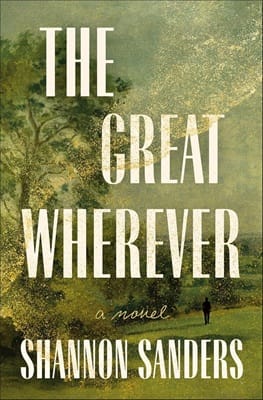
The Great Wherever by Shannon Sanders
July 7 | Henry Holt and Co. | 416 pages
In its third-person narration following Aubrey Lamb, a relatably chaotic young woman in her thirties living in DC, Shannon Sanders' debut The Great Wherever mostly reads at the beginning like enticing but straightforward literary fiction. We see Aubrey being dumped by her boyfriend (when she thought he was going to propose), juggling multiple jobs, and eventually becoming aware of the specifics of her inheritance of a share of a farm in Tennessee. It’s easy to forget, though we’re told from the start, that this is all being related not just by any old third-person narrator, but by an ancestor of Aubrey—whose family line of Black Tennesseans plays a central part in this historical-modern ghost story—a person who is privy to Aubrey’s every thought and secret and has no qualms about judging her. The way the narrator dips in and out of Aubrey’s world, maintaining a distinct first-person voice but often taking a backseat to the unfolding storyline, subtly invites the reader to consider the roles point of view and history play in storytelling and in life. I can't wait to keep reading this. We plan on featuring The Great Wherever in more detail soon. An audio sample and book club guide are accessible on the publisher's page. —Elisabeth
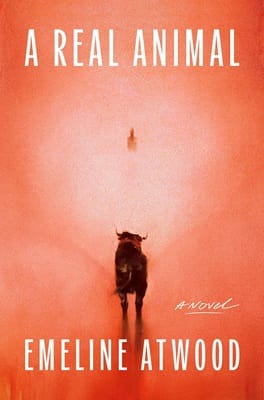
A Real Animal by Emeline Atwood
July 7 | Catapult | 368 pages
Catapult is really good at finding novels that walk the line between brilliantly weird and performatively quirky in a way that I appreciate. A Real Animal, the debut novel by Emeline Atwood, looks to be one of those novels. The plot follows Lucy, a senior in college who is spiraling after a sexual assault. She stops communicating with her family, gets involved with shady men, and moves to Indianapolis (perhaps the most obvious marker of her emotional instability). I’m fond of books that feature a slow unraveling, and I love books with weird animal content/people who are highly attuned to animals. The author has already racked up several prizes for her poetry and short fiction and the book has received a starred review from Publishers Weekly and Library Journal, with the former recalling a scene in which Lucy “briefly transforms—perhaps literally, perhaps not—into a leopard and causes alarm by scaling a tree on campus.” Perhaps indeed. PW breathlessly insists that “Readers will be held captive by Lucy’s exciting voice.” Along with Sanders' book above, A Real Animal also appears on Debutiful’s “Most Anticipated Debuts of the Year” list, with high praise. An excerpt is featured on the Penguin Random House website. —Lisa
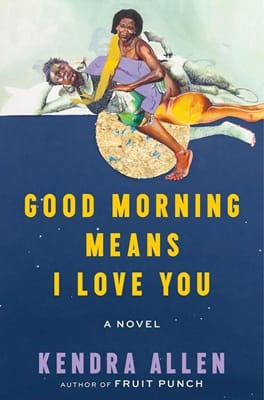
Good Morning Means I Love You by Kendra Allen
July 7 | Ecco | 224 pages
This is another debut I’m excited about (seems to be a good year for debuts in general). Kendra Allen has previously published one collection of poems, one essay collection, and one memoir, so with this novel she is affirming her status as a quadruple threat. Allen’s unusual narrative style, full of fits and starts rather than polished smooth, is apparent in the publisher’s excerpt, as we see in the opening pages the narrator Rae choosing to leave her two partners, Noon and Micah, after giving birth to children from each of them. It is still rare to see a work of fiction dealing candidly and straightforwardly with polyamory like this: Rae’s relationships are crucial to the telling of the story, but the relationship structure is not placed before the reader like something to judge and consider either acceptable or not—the polyamory isn't the point. Instead, the narrative focuses largely on Rae’s traumatic experience giving birth to her son Night, during which she almost died. After she has left, Rae learns that Noon has filed a lawsuit against the hospital where the birth occurred without her consent. In addition to the unorthodox family structure, I’m interested in this book’s exploration of bodily autonomy and trauma, motherhood and what responsibilities it does and doesn’t bring with it. I’m excited to read this novel and to see what Kendra Allen writes next (stage play? true crime? Heated Rivalry fan fiction?). —Lisa
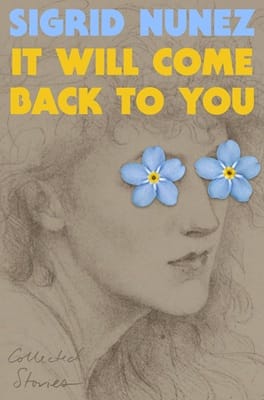
It Will Come Back to You by Sigrid Nunez
July 14 | Riverhead | 224 pages
This is the first short story collection from well-known novelist Sigrid Nunez, featuring thirteen pieces from throughout her career; it’s been receiving glowing reviews, and is bound to be enjoyable. Nunez is very good at writing everyday suspense, and at misdirection, as occurs in “Greensleeves,” appearing here and first published in the New Yorker a couple of years ago, which opens with a woman speaking to a therapist in a situation that soon challenges the reader’s assumptions. In another story, “The Naked Juror,” first published in Daedalus, a character reporting for jury duty believes she recognizes the defendant, but this turn of events isn’t the plot twist it may seem to be. Nunez can also be very funny. Later in “Greensleeves,” a silence falls during a party, and a woman remarks that she heard somewhere, she thinks in Turkey, that when silence falls in a room it means a girl child has been born, because “when a son is born it’s an occasion for cheers and celebration, but when it’s a daughter no one knows what to say.” Another woman replies, “My family is Turkish, and I’ve never heard that.” —Elisabeth
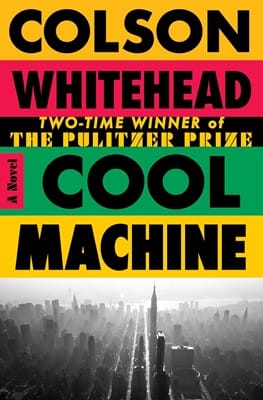
Cool Machine by Colson Whitehead
July 21 | Doubleday | 368 pages
The first part of Colson Whitehead’s latest novel features as an epigraph a quote that is impressively confounding and subsequently gets in your head like a philosophical earworm: “It’s harder to find a good coffee table than it is to fall in love.” Is it a puzzle? A joke? A piece of sage advice? As the reader soon finds out in the engagingly written and charmingly offbeat first pages, the character Ray Carney, the author of this thought, isn’t sure himself, it’s just a seeming truth that’s occurred to him in his time as a furniture dealer and fence who takes pride in all aspects of his work. “What to do with such knowledge? If one truly believed that, why sell furniture at all?” Why indeed? The prospect of finding out, or just of learning more about a person who would have such a thought (which might amount to the same thing), seems like enough of a reason to keep reading what Publishers Weekly calls “the greatest New York novel in years.” An excerpt is available on the publisher's page. —Elisabeth
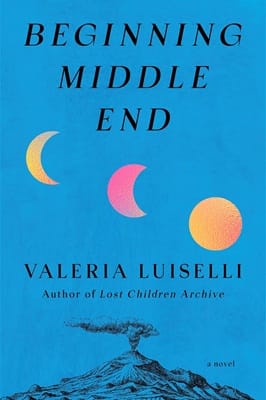
Beginning Middle End by Valeria Luiselli
July 28 | Knopf | 368 pages
In Luiselli’s fourth novel, a daughter asks her mother whether the book she’s writing will have a beginning, middle, and end, because her books don’t usually have a traditional structure. This is a clever in-joke about Luiselli’s own writing, but this book does in fact have a standard linear narrative, even if it is augmented and enhanced by segments contemplating Greek and Roman literature and myth, among other subjects. One can see in the brief excerpt available from the publisher that while the setup is narrated in straightforward prose, the paragraphs are set apart by various headers, calling to mind short poems. The mother and daughter travel to Sicily, where the mother is hoping to finish her latest novel, but they find themselves distracted by an unusual task: they must return a small mosaic of the god Proteus to the village from which the mother’s own mother once stole it while working on an archaeological dig. Early reviews also reference the potential eruption of wildfires and the presence of refugees, suggesting a more global scope to the drama, and a return to the subject of migration Luiselli covered to much acclaim in her novel Lost Children Archive (2019). Publishers Weekly calls this one a masterpiece and I have no trouble believing it. —Lisa
Who Even Reads is an independent publication run by two hardworking editorial professionals. We write about books from a liberation perspective, with a socially conscious focus that's both fun and serious, covering mostly new releases. Your donations subsidize what we do. Learn about us.