
A Double Exclamation in the Greater Milwaukee Area: Patrick Cottrell's Afternoon Hours of a Hermit
The other reviews and accounts of this novel I read before reading the book itself, which rightly suggested a cloud of uncertainty hanging over the proceedings, did nothing to prepare me for the several gut-punch revelations that occur near the end, revelations that hinge on specificity.

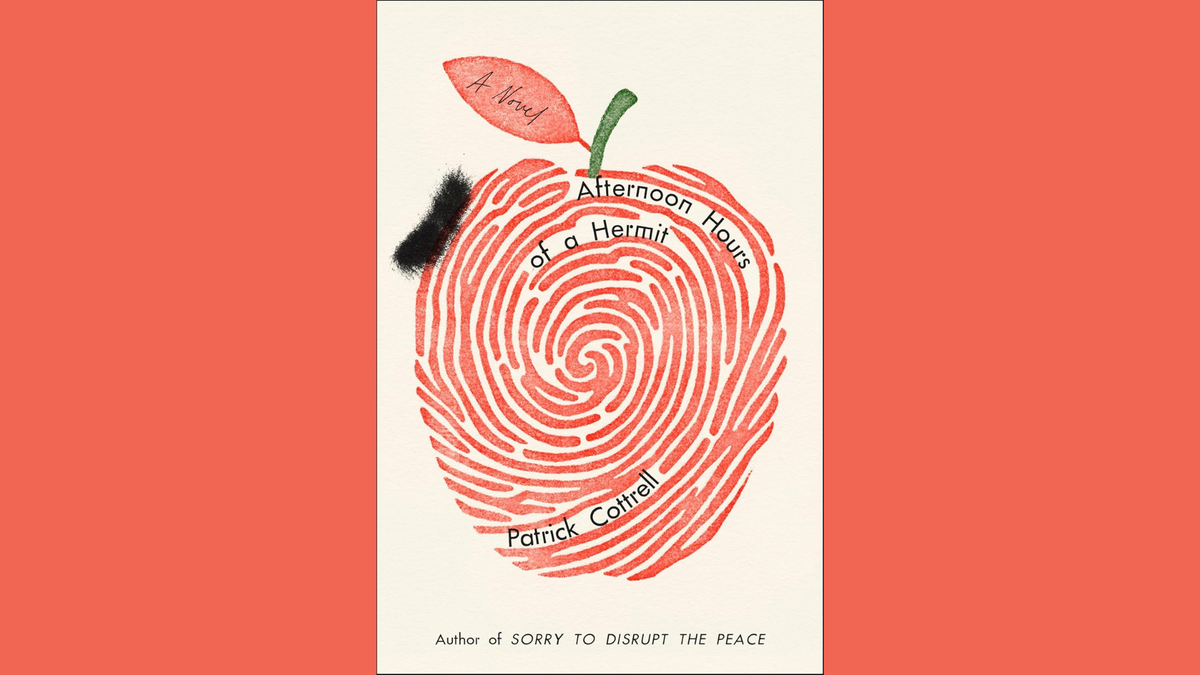
In Patrick Cottrell’s Afternoon Hours of a Hermit, main character Dan Moran, who teaches writing to “troubled youth” in Brooklyn, receives an envelope in the mail containing a picture of his youngest brother Kevin, who killed himself years ago. Dan, Kevin, and their middle brother Matthias were born in Korea, separately, and adopted by their parents, white people who live in the Milwaukee suburbs. The picture in the mail is one from childhood, in which Kevin is dressed like a detective, though the mystery of who sent the picture is now Dan’s to solve.
After speaking with his mother on the phone, being unable to determine the source of the mailed photo, and gleaning a new detail about Kevin’s suicide (the night his brother died, his mother says, he had written the names of “three women” on his hand, but she can’t remember who they were), Dan decides to return home to reopen a previous “investigation” into his brother’s death. This endeavor is paired with his efforts to write a psychological thriller, and it echoes Cottrell’s first novel Sorry to Disrupt the Peace (2017), in which the character Helen Moran returns home to the Milwaukee suburbs following a brother’s suicide. In Afternoon Hours of a Hermit, a novel titled Sorry to Disrupt the Peace is Dan’s autobiographical novel, published under his deadname (represented throughout the text by a blank). Dan says that novel was “transcribed” from “the initial discoveries I had made during the investigation of my brother’s suicide.” Cottrell himself transitioned between the time of publication of Sorry to Disrupt the Peace and Afternoon Hours of a Hermit. This later book grapples with, among other things, the complications of returning to a place of one’s past as a trans person. Shortly after his arrival at the family home, where his parents are preparing for a memorial dinner on the fifth anniversary of Kevin’s death, Dan is mistaken by a cousin for “an Asian male intruder,” and then subjected to deadnaming, other misgendering, and debate over the legitimacy of his identity.
Afternoon Hours of a Hermit could be viewed as a sequel to Sorry to Disrupt the Peace, but as a reader coming to this book who either has or hasn’t read Cottrell’s first novel, the parallels or not-quite-parallels aren’t something you need to stress about. Cottrell is making a connection to his earlier material, writing from within the same literary universe, or from a neighboring planet, but there are so many different ways to look at that connection. Is Cottrell’s Sorry to Disrupt the Peace the same book as Dan’s Sorry to Disrupt the Peace? Who knows. While Afternoon Hours of a Hermit blatantly teases the reader with its autofictional and metafictional qualities, and while there is a relationship between the books, that relationship is complex and rife with possibility. In a recent interview with Electric Lit, Cottrell referred to this recent book as “a hall of mirrors.” Within it, reality is distorted, uncertain, and sometimes seems unimportant to Dan even as he is deadly serious about the mission he has undertaken.
I was initially drawn to Patrick Cottrell’s work because of specificity. That is to say, as a queer person of Korean heritage who was raised mostly by a white mother in a very white area, I am often interested in the writing of others who share some of my experiences, or at least similar or related experiences, because they aren’t so easy to find. Cottrell is a Korean adoptee who grew up in the Midwest, including in Chicago and Milwaukee, where I’ve also lived. But it isn’t just that I’m interested in his writing because of what he and I have in common, it’s also that I’m interested in the artistic endeavors, particularly fiction, of people who come from a place of experiencing specificity differently from the majority. In other words, marginalized or multiply marginalized people who are very much literal minorities in the spaces where they exist or come from (a subject I addressed earlier this year in my review of Nina McConigley’s How to Commit a Postcolonial Murder), who are tied to elements of specificity in their bodies, their points of origin, their cultural references. I’m interested in how they handle that specificity in their art.
So while I may be projecting my own feelings, I can’t help but see Afternoon Hours of a Hermit as a work that is in very deep ways about specificity. Dan is haunted not so much by the particulars of his identity but by how others react to him because of them. His family refuses to budge to accommodate his existence, to even call him by a different name, and this blends with their general disapproval of his “investigation,” his writing, his various impulses and preoccupations. He is also haunted by the absurd specificities of his youngest brother’s life and death, in a way that many people no doubt are when they suddenly lose someone close to them. He ruminates on what his brother was doing in the time leading up to his suicide, whose company he kept, how all events and people connect. Like a detective, or like the popular idea of a detective, he seems to believe that the right clue or detail will cause the whole mystery to sync up into something legible. We know the futility of this from the beginning. But in a sense his investigation is quite real, and the mystery of Dan and his brother and his family really does unravel into its respective parts when pulled, pulled into the separate strands of Dan’s grief and the reality of the world around him. The other reviews and accounts of this novel I read before reading the book itself, which rightly suggested a cloud of uncertainty hanging over the proceedings, did nothing to prepare me for the several gut-punch revelations that occur near the end, revelations that hinge on specificity.
On the page, Afternoon Hours of a Hermit’s specificities make it its own satisfying mystery worthy of investigation for the reader. Dan Moran is a fabulously plain name for a hapless investigator, and it yields some linguistic treats if you start to think about it. In the first pages of the novel, I encountered a double exclamation mark, found its singularity (or perhaps the opposite of that!!) very funny and later encountered something like an explanation for it, or at least a synchronicity. Such synchronicities abound both in the highly stylized writing and the plot details. Throughout Dan’s investigation, those around him, when they aren't misgendering him, mistake him for his brother Matthias, even though the two of them aren’t related by blood. This is the sort of realistic detail that often appears in stories about racially marginalized characters, an everyday microaggression. But something about the sober heaviness of the prose, the way everything in Dan’s universe feels weighted by extra significance, made me think it was something more. What if the very fact of having been raised in such a specific way, of sharing certain rare experiences, could make two people begin to look alike—due to facial expressions wearing into facial features, reactions and habits picked up from the same stimuli, something like that? And late in the novel, when another character of Korean background who was close to Dan’s brother remarks on how much he looks like Kevin, I felt this was more strongly implied to be the case.
Three years ago, after general interest in recognizing the ongoing Covid pandemic as the ongoing Covid pandemic had begun to wane, after my halmoni, my grandmother on my father’s side of the family, had died in a nursing home in the Chicagoland area, and after having bounced around several other cities in the Midwest, I returned there. I distanced myself from my childhood home by about half an hour, but it still felt like a return. This was part of a gradual move that I made with two partners, who previously were living in two different places, during a time when, anticipating the results of the 2024 election and the general movement of the political climate and its effects on queer, disabled, and still-Coviding people, we all planned to be together by the next year in the most livable place for us that we could reasonably afford and get to. And I grappled with returning to a place that I didn’t think that I would ever return to, and upon returning I struggled with feelings of super-meaningfulness, of a need to fit in among all my past history, to reorient myself, to be accepted and seen in a way that I wasn’t and didn’t even try to be decades ago, to mourn my grandmother in a way that made sense to me. Trying to navigate this new/old landscape in my current circumstances felt like trying to solve a mystery, trying to piece together clues that no longer fit together at all, if they ever did.
In reading Afternoon Hours of a Hermit, I found it easy to relate to both Dan’s attempts to uncover the past and his flailing inability to accept the realities of the present. But it’s uncomfortable to witness, frequently cringeworthy. At one point he finds an apartment complex where his brother used to live and interrogates a woman in the rental office about Kevin, never dropping his “investigator” mode, never simply explaining that Kevin was his brother, a route that might have elicited sympathy, yielded more information. I wanted to tell him that he was being creepy, possibly putting himself in danger. And yet there is something cathartic about seeing him throwing all caution to the wind, expressing his intentions and his desire for truth and his pain in this guileless way.
“I remember Kevin Moran, she said. He was a really good kid. … I remember hearing what happened to him. It was violent and horrible. Why are you coming in here and bringing this up? What’s wrong with you? …
I’m not doing this because I want to, I said, but because I don’t have a choice.
There’s something wrong with you, she said.”
Dan’s elaborations in this passage show that he isn’t only referring to the investigation of his brother’s death as something he can’t help, but to his work as a writer, to how he is digging up “that same old suicide story” like “authors who did that, the ones who wrote the same story over and over instead of using their imagination.” Afternoon Hours of a Hermit is humorously self-referential in this way, but it doesn’t come across as apologetic, nor should it. It is in part a story about dealing with deeply universal human experiences like grief in a culture or space where one doesn’t have access to the usual channels for dealing with those things, how a natural feeling like grief, in this scenario, can become an obsession, and how following that obsession can be right, or inevitable, even as it is also weird and jarring and maybe kind of wrong, too.
Dan is already alienated from his family because he is trans, and because he lives in New York, and because he in general has lived an off-script life, and all of these factors are of course not unrelated. He knows that Kevin, too, when he was alive, struggled with familial expectations, created an illusion of his own life for their parents; he invented fictional colleges that he attended, a fictional career, all while lying low in the Milwaukee suburbs, seemingly not doing much of anything before his death. Matthias, a Netflix content creator, is the child who has most closely hewed to parental expectations, and at one point is seen reassuring his mother that he’s happy to have been adopted. The novel is arguably quite generous and gentle in its portrayal of Dan’s family, but it also shows to what extent Dan’s needs and differences are taken by others as aggressive and inconsiderate, even when he is perfectly within the bounds of standard acceptable social behavior, while his parents and surviving brother can essentially get away with saying whatever they want about and to him, their need for a sense of normalcy and their desire to feel like good people trampling clumsily over and through every situation. If Dan is sometimes clumsy himself, sometimes overreactive, it’s easy to see why. If he is revisiting the same writing material, it is because he needs to.
And if Cottrell’s novel is more nuanced in its portrayal of Dan than anyone else that’s because this story is very much his, and Afternoon Hours of a Hermit is supremely confident in its commitment to the character’s voice and world. It offers unique literary delights at every turn, and delectable dry humor (“He loved Bach, didn’t he, my father said. / He also liked Tori Amos, I said. / Tori who? said my mother. Was that a friend of his?”) matched with satisfying depth. It gives expression to the loud dissonance of a person adrift in a landscape not made with him in mind but of which he is a part anyway.
Who Even Reads is an independent publication run by two hardworking editorial professionals. We write about books from a liberation perspective, with a socially conscious focus that's both fun and serious, covering mostly new releases. Your donations subsidize what we do. Learn about us.