Books We Like the Looks Of: New Releases in April 2026
See what April books we're excited about. This month's selection includes an International Booker Prize nominee, a novel that features Monica Lewinsky as a patron saint, and more.

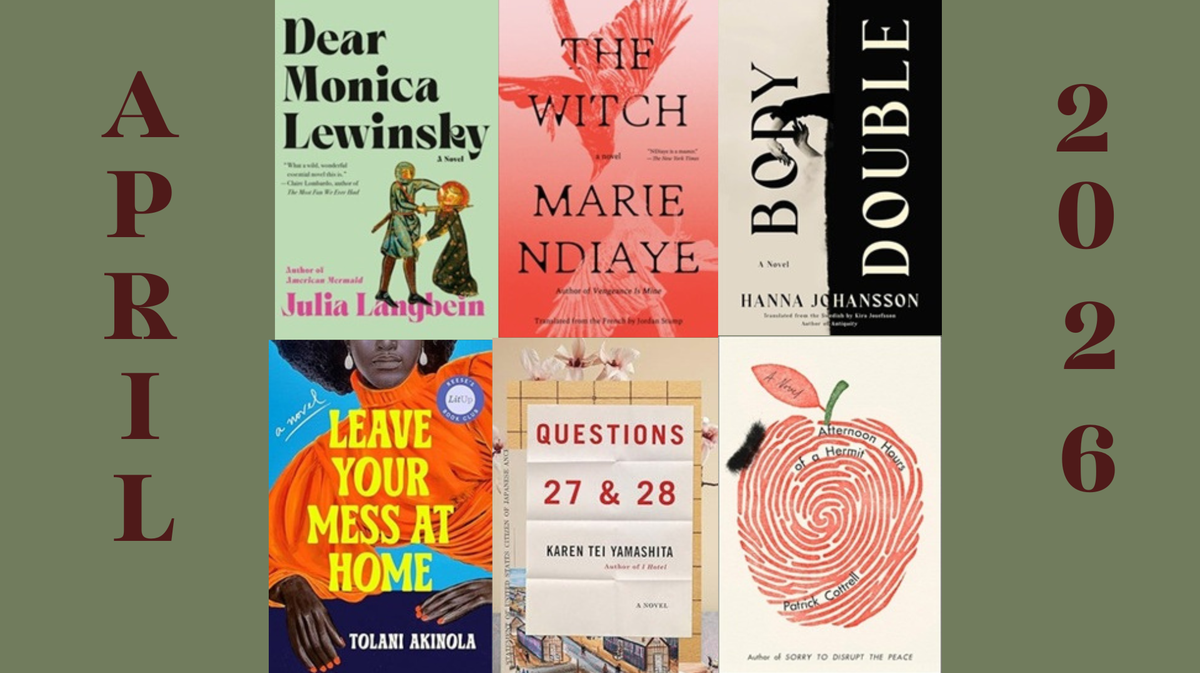
April is coming, and like many people at this time of (this) year, we’re feeling both busy and overwhelmed. But we’re excited about our coverage here. At least a couple of the books below will be featured in upcoming reviews or articles, and we already have a review of one of them up. We’ll also be publishing an interview with writer Kenan Orhan, author of the fantastic novel The Renovation, which we included in our February new releases. Other projects we’re working on include a piece about Toni Morrison’s recent posthumous Language as Liberation, and an article on bookstores still requiring or requesting masking—and in some cases taking other measures—to keep their communities safe in the ongoing pandemic. We hope you enjoy this selection.
Good-Looking Books Coming Out This April
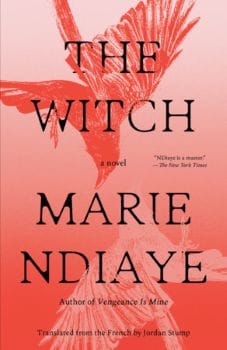
The Witch by Marie NDiaye (translated from the French by Jordan Stump)
Apr 7 | Vintage | 144 pages
The latest work from Marie NDiaye to appear in English translation, shortlisted for the International Booker Prize, arrives fashionably late—it was published in French in the 1990s. This is a funny and beguiling book that tells the story of a modern-day witch, Lucie, and her relationship with her two daughters. The Witch isn’t the kind of cute, whimsical novel you might expect based on this premise. Lucie’s powers, passed down through generations by the women of her family, are possibly the most normal aspect of the book’s grotesque and absurd world of class and aspiration. It opens in a small-town setting in which Lucie finds herself negotiating interactions with her social climber husband and her nosy neighbor Isabelle. As her husband loses interest in the family and her daughters grow into their powers, Lucie becomes fixated on rekindling romance between her own parents, who separated years ago. The second half picks up the pace of this suspenseful, surreal family drama. Jordan Stump’s translation captures NDiaye’s exquisite writing at the sentence level. A translated story-portion of the text appears to have been published in The Paris Review last year as "Monsieur Matin." We’re planning coverage of NDiaye’s work in translation in the future.
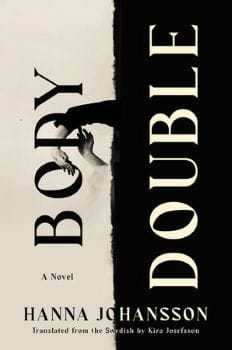
Body Double by Hanna Johansson (translated from the Swedish by Kira Josefsson)
Apr 7 | Catapult | 224 pages
Catapult excels at publishing strange books about women and their obsessions. This one starts off as somewhat reminiscent of Patricia Highsmith’s Carol (1952): one woman meets another woman in a department store and they begin a romance of sorts. In an alternating storyline, an unnamed character working for a ghostwriter begins to get lost in her work, which seems to be the only thing of substance in her life. This setup sounds close to another book we reviewed earlier this year, Aoife Josie Clements’ Persona. But unlike Persona, or Carol, it’s hard to call this a love story, and its existential exploration of identity is foregrounded. This can make it seem at times like it’s going to drift into vagueness, but in fact it’s a tightly plotted, carefully constructed story that hides quiet revelations.
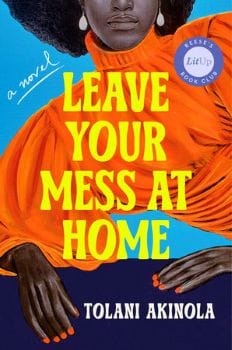
Leave Your Mess at Home by Tolani Akinola
Apr 14 | Pamela Dorman Books | 384 pages
Tolani Akinola’s debut opens with the fragmented relationship between Anjola and her sister Sola. Sola, it seems, has frequently been running away in some form or another, but now, after having not seen each other in ten years, the two are reunited in a friend of a friend’s apartment in Logan Square in Chicago. Tension pervades the scene as Anjola wonders whether Sola will be visiting their parents while in town, and Sola becomes focused on a party Anjola is attending for her friend Neil’s girlfriend, while the implication that Anjola is romantically interested in Neil—or should be—hangs heavy. It becomes apparent that Anjola, who graduated from Yale and returned to Chicago for her medical residency, struggles with tending to her own needs and desires, that this is a point of tension between her and Sola and perhaps the rest of her family. Spanning an ensemble cast of siblings, including Anjola, Sola, and two others, Leave Your Mess at Home is, according to Electric Lit, “A stunning debut that does not shy away from the messiness of young adulthood and the chaos of discovering who you are.” You can read a substantial excerpt at the link above.
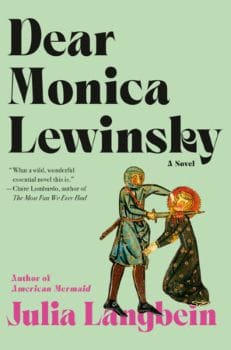
Dear Monica Lewinsky by Julia Langbein
Apr 14 | Doubleday | 320 pages
This is one of the funniest books I’ve ever read (Lisa). It’s not funny the way most funny books are funny. (Like when an athlete hosts Saturday Night Live and people are like, “Wow, Derek Jeter is funny!” No, he can do an imitation of funny on a platform where you’ve been primed to laugh and your expectations were very low.) Dear Monica Lewinsky is funny in the sense that it is very much a work of comedy above all else. The book is about a forty-five-year-old woman named Jean Dornan who is visited by a vision of Monica Lewinsky, “the patron saint of patriarchal cruelty.” Lewinsky takes Jean on a tour of the summer of her nineteenth year, when she took part in a medieval art studies program in France and became sexually involved with a member of the faculty, David Harwell. With Saint Monica’s help, Jean revisits this time of igniting passions and rediscovers herself as an ambitious, passionate, intelligent, ruthless woman—a force to be reckoned with. The ending is triumphant, as Jean takes her reckoning back to France to confront Harwell. Julia Langbein has crafted a hilarious, emotionally complicated story about a woman becoming who she was always meant to be. Read an excerpt at the link above and see Lisa’s full review here.
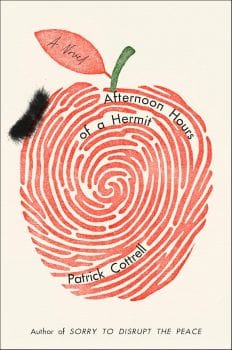
Afternoon Hours of a Hermit by Patrick Cottrell
Apr 21 | Ecco | 224 pages
Dan Moran (“a Korean adoptee, single, approaching forty, once plain-in-appearance as a woman, now ugly as a man…”), who is teaching fiction in Brooklyn, mysteriously receives a photo of his dead brother in the mail, and returns to his family home, where he attempts to investigate this brother’s past. Dan is the author of a book called Sorry to Disrupt the Peace, the title of Cottrell’s own debut from 2017, a beautiful, introspective gem of a novel in which a character named Helen Moran similarly tries to piece together the reasons behind her brother’s suicide. According to People magazine, the novel is “largely about navigating the past alongside the reality of the present, particularly the internal confusion the trans protagonist experiences when returning home.” Cottrell says, “It's about mistaken identity, performance, speech and seeking answers in all the wrong places.” There doesn’t appear to be an excerpt of Afternoon Hours of a Hermit available, but you can read part of Sorry to Disrupt the Peace on the site of its UK publisher, And Other Stories.
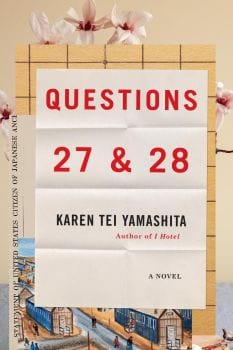
Questions 27 & 28 by Karen Tei Yamashita
Apr 28 | Graywolf Press | 464 pages
The title of this book refers to questions posed to Japanese Americans interned during World War II when they were being considered for release. Question 27 asked if they were willing to serve in the US military in combat, while Question 28 asked if they would renounce allegiance to the Japanese emperor. In this book, seasoned writer Yamashita—author of Tropic of Orange (originally published in 1997) and I Hotel (originally published in 2010), among other books—presents a mixture of historical fact and fiction exploring the lives of those touched by these questions. Maxine Hong Kingston (of The Woman Warrior fame) writes, “Now, at this very moment, our government is rounding people up, imprisoning and deporting them—immigrants, refugees, students, workers with legal visas ... It is crucial that we read Questions 27 & 28 by Karen Tei Yamashita. Learning what happened not that long ago to American citizens may help us know what actions to take now, legally, politically, heroically.”
Who Even Reads is an independent publication run by two hardworking editorial professionals. We write about books from a liberation perspective, with a socially conscious focus that's both fun and serious, covering mostly new releases. Your donations subsidize what we do. Learn about us.