Review: A Splintering by Dur e Aziz Amna and the Precarity of the Social Climb
If A Splintering is in some ways a morality tale, it isn’t one that suggests Tara is wrong for wanting more than life has given her. Rather, it shows that by defining her happiness only through the oppression of others, only through ascending from oppressed to oppressor, she remains oppressed.

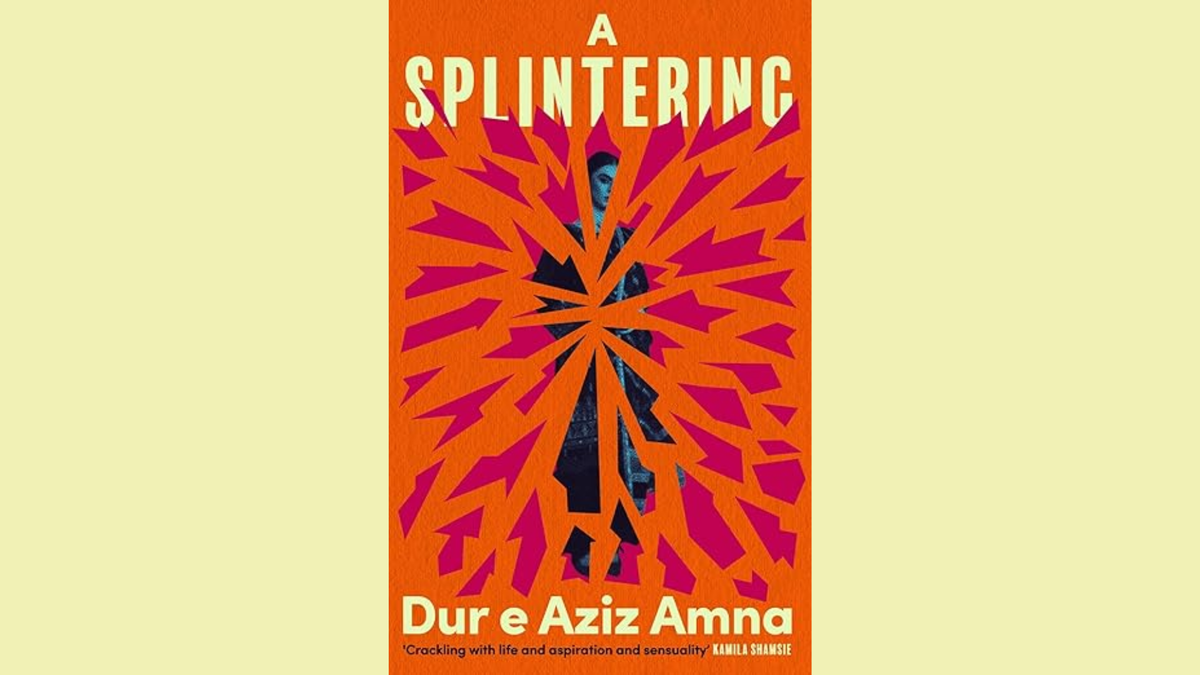
A Splintering by Dur e Aziz Amna is a particular type of well-worn story, one of class ascension and deception, of rags to riches trickery, of a hero one can sort of root for even while acknowledging the game they are playing is corrupt, of social critique from within the societal mechanism. This type of story still feels like it has something to teach us, something about the acquisition of power as a double-edged sword for the oppressed, the desires that we fall into even as we rail against them, the desires that we struggle to separate from the structures we understand to be harmful and unsustainable.
Amna’s spare, vivid prose teaches of the seduction of power as it seduces the reader through the life of Tara, a woman who grew up in poverty in patriarchal rural Pakistan. As narrator, she acknowledges herself within the tradition of morally grey characters via a sly wink:
“As I tell you my story, will you find it hard to empathize? I am what some call an unrelatable character, and I have done something unthinkable. But I implore you to listen. As the storyteller, I need you on my side. And we know that a story is only as good as its beginning. So let my story begin with rage.”
And so Tara tells her villain origin story, relating how she made her way, through a series of lucky breaks and calculated moves, to marriage to an accountant in Rawalpindi and a teaching job before embarking on an ambitious and dangerous quest for true wealth and status. Throughout these endeavors, her brother Lateef has remained and will remain her faithful nemesis. She has fond memories of him from childhood but he has since become domineering towards her and her sisters and seems to have developed a “peculiar, fierce grudge” against Tara, the most educated. He disapproves of her attempts at independence, flexing his sense of entitlement as the family son while he makes his own moves to achieve success in a rapidly modernizing country.
A Splintering has the makings of a suspense novel and a morality tale, a feeling of leading up to some horrible truth, but the big reveal, once we reach it, is a development we’re ready to receive without shock. Much of the value of Amna’s story lies in its relative lack of drama. Tara comes to do things that are morally questionable and finally violent, but she does these things within a world portrayed as brash and uncaring to begin with, such that her own actions are hardly surprising. What seems noteworthy are the glimpses of inner lives around her so unlike her own. Her husband, Hamad, harbors some typical notions of masculine dominance but these don’t extend to professional ambition or competition with other men. A self-identified socialist content to read Marx in his spare time, he projects indifference to Tara’s attempts to improve their financial situation but doesn’t object to them, even as she begins to have sex for money with other men, including his boss. When Tara first marries Hamad and moves in with his family, his mother, Hajra, seems to delight in exercising control over her, but later, when Tara and Hamad begin advancing above her socially, Hajra is unthreatened and happy for them, or at least appears this way to Tara. Tara’s own mother guilt trips her for moving away from the country, but understands and encourages her desire for education and independence, ultimately seeming to place more value on these things than Tara does.
The differences between these other characters and Tara function as a reminder that while the others live in the same brutal world she does, they aren’t preoccupied with conquering it as she is. Maybe they are more content with their lives because they haven’t suffered as she has—this seems more likely in the cases of Hamad and Hajra than with Tara’s mother—or maybe they simply have different interests and ideals.
In Tara’s view, “there is no socially sanctioned way of remedying” the “sense that many of us have, that life is unfair … Most people make tepid peace with it.” This may be true, but if so, it isn’t the only truth, and one could argue that she goes so far as making aggressive peace with a situation she doesn’t wish to destroy but to occupy in her own way. If A Splintering is in some ways a morality tale, it isn’t one that suggests Tara is wrong for wanting more than life has given her. Rather, it shows that by defining her happiness only through the oppression of others, only through ascending from oppressed to oppressor, she remains oppressed. Even then, her lack of fulfillment in an undeniably patriarchal society isn’t all her doing. But she has never discovered her own standards for happiness. In playing by the rules of the system that shackles her, she reinforces its legitimacy and continues to live by its standards alone.
A Splintering is a relatively straightforward story that flows easily in its telling, thick with plot. At times, I wanted to know more about the people in Tara’s life. But keeping them at arm’s length has an intriguing effect. There is something disconcerting, for instance, about Hamad’s quiet inscrutability. Tara suggests that his temperament isn’t necessarily as mild as it seems, saying, “On the one hand, there are men like my brother: hot-headed and possessive, determined to control every aspect of their women’s lives. … On the other are men like Hamad: fatalistic and indolent, neutral about everything. Both types have immense potential for violence, but it is suppressed in the latter.” We see flashes of violence in Hamad to confirm this, and so his more even-tempered moments come with a touch of surreality. If the sometimes-gentleness of Hamad, Lateef, and other men Tara knows has a humanizing effect, it also has a sinister one, because it shows how unpredictable they are, how she can never know if she is truly safe. It also reflects the stark loneliness and constant suspicion that must be maintained by women who make a career of manipulating heteropatriarchy to their own ends.
One of the most fascinating aspects of A Splintering is Amna’s exploration of how Tara’s desire for power relates to her sexuality, even before she begins using sex as a means of advancement. From a young age, she creates “films” in her mind based on TV dramas and magazine stories, romances and fantasies in which she inhabits the perspectives of men interacting with women like her. In one humorous sequence of thoughts, she wonders whether she might be attracted to women, before deciding abruptly, “No, it was not like that,” and attributing the gender-swapping to never having encountered the kind of man she wants. This proves to be more or less true, as she later does meet a man to whom she is undeniably, magnetically drawn, and at this point she is able to imagine herself as “the woman” in the “films.” But the reader may wonder to what extent even this attraction is entangled with her appetite for power, and to what extent her sexual feelings in general are informed by patriarchy. She may be right about having been unable to imagine herself into a romantic situation with a man for lack of experience, but it seems there is something more to her wanting to possess the male gaze from both ends. The relationship situation she eventually finds herself in demonstrates how her unique desires, no matter how vulnerable or genuine, have nowhere to flourish. They feed back on themselves, trapping her in a cage at least partly of her own making.
The constant strength of A Splintering is its ability to sow unease from multiple directions. No matter what you end up thinking or feeling about Tara, it is hard to come to a firm conclusion about her actions, about the events that eventually transpire for her and whose fault they are. It isn’t so much a morality tale as a book whose subject is morality and its slippery nature. The narrative maintains a lingering sense of dread, but it is difficult to say what that dread is attached to. The personally harmful and destructive choice she ultimately makes? The many choices leading up to that? Or is the dread simply in the telling of a life that makes the path she takes conceivable?
Who Even Reads is an independent publication run by two hardworking editorial professionals. We write about books from a liberation perspective, with a socially conscious focus that's both fun and serious, covering mostly new releases. Your donations subsidize what we do. Learn about us.