Books We Like the Looks Of: New Releases in May 2026
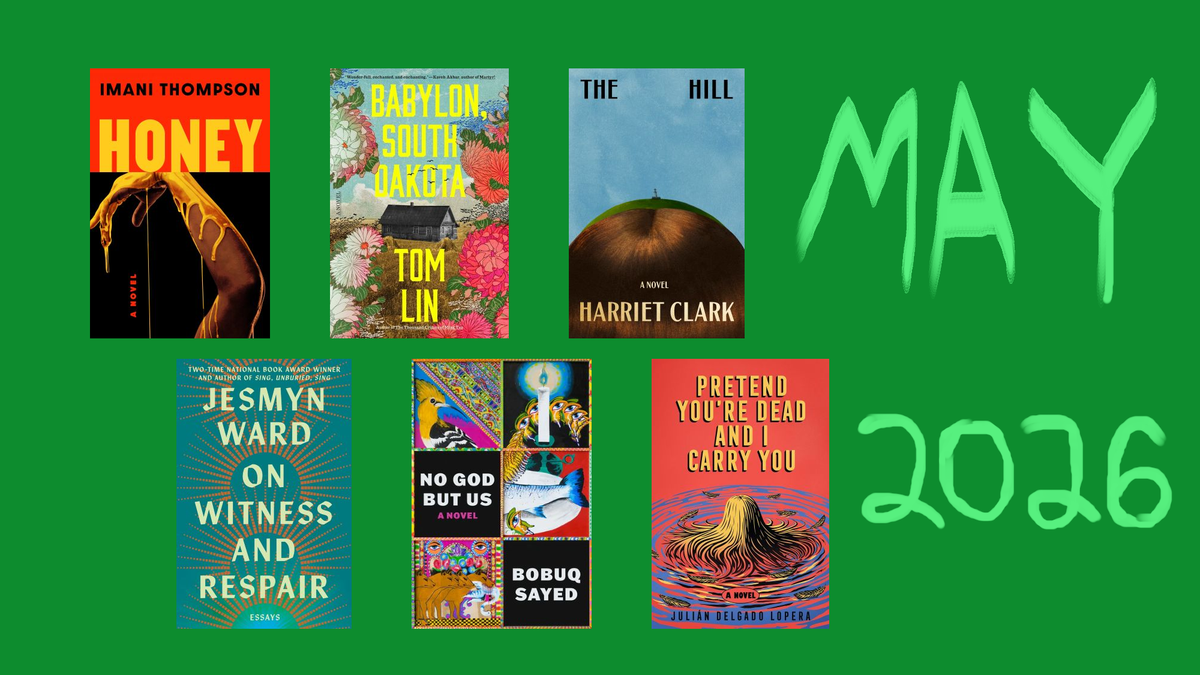
Our monthly book list for May includes nonfiction from Jesmyn Ward, a speculative novel by Tom Lin following Chinese immigrants in South Dakota who encounter a secret government program, and more.
As has been the case for a while now, the air is full of doomerism and cynical exhales, major publications are cooking up divisive thinkpieces around how bad everything is to feed internet discourse, and it's all just not very interesting. The world is, and always has been, a weird place full of spectacular possibilities, and those possibilities are present in places other than those funded by the richest people and institutions. They're present in the books below and in the oncoming spring. They're present in the acts of people, many of them in the literary sphere, intent on building and maintaining a better world, including the authors who continue to use their platforms on social media to raise money for Palestinians in Gaza trying to meet basic needs, including the readers developing an understanding of history through poetry and literature, including the booksellers we've spoken to recently for our article (coming this month) on bookstores with Covid mitigation policies. Let's not opt out now by blowing smoke in each other's faces; we need clean air.
Good-Looking Books Coming Out This May
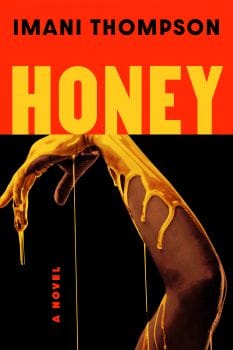
Honey by Imani Thompson
May 5 | Random House | 384 pages
Kirkus didn’t give this debut novel a star, but the review contains the word “Wow,” which is challenging enough to get a Kirkus reviewer to say that it should probably automatically get one. The full context: “Wow. Think Fleabag channeled by Valerie Solanas.” And the first pages of this story—about Yrsa, a Cambridge PhD student negotiating the available dating pool of shitty men as a young Black woman, who develops a taste for murder—do seem like they could be adapted into a bold but artfully understated and dryly witty television series. Describing Yrsa’s workplace, Thompson writes, “Unlike lots of Cambridge there is no charm to the Sociology department. The entrance feels like that of a sexual health clinic.” And describing the man Yrsa is seeing: “Ethan’s hardly worth pine nuts.” Though why the reviewer would have reached for the Fleabag comparison when Killing Eve was right there is beyond us. (And let that show be a lesson that series centering racially marginalized characters written by roomfuls of white people are doomed to crash and burn beyond the wildest reaches of one’s imagination.) An excerpt of the book is available on the publisher’s page from the link above.
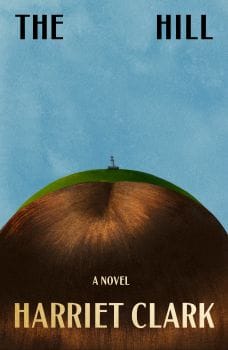
The Hill by Harriet Clark
May 5 | Farrar, Straus and Giroux | 288 pages
Harriet Clark's The Hill is a coming-of-age novel like no other. It centers on Suzanna, a child who is being raised by her grandparents but goes every Saturday to Hillcrest Prison to visit her mother, who is serving a life sentence there. When her grandfather dies, Suzanna hitches a ride to the prison with a nun, because her grandmother has vowed to never set foot in Hillcrest. Suzanna has decided she will visit her mother every weekend for the rest of her life. She feels that this is her duty, and while it may seem inherently depressing to imagine a child making this vow, it instills in Suzanna a sense of something greater than herself: big qualities like devotion and loyalty. (Harriet Clark’s dry humor also rescues the book from the sadness of its premise.) The novel is loosely based on the author’s real childhood, visiting her mother Judy Clark, a member of the Weather Underground who was sentenced to 75 years to life for driving a getaway car while members of the WU and Black Liberation Army robbed a Brink’s truck of $1.6 million. The real-life story is a spectacle, but this quiet novel is just as memorable. You can read or listen to an excerpt on the page linked above.
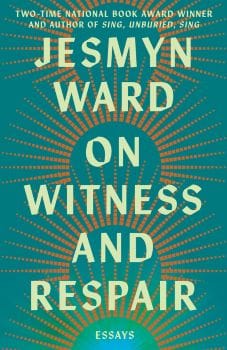
On Witness and Respair by Jesmyn Ward
May 19 | Scribner | 256 pages
This essay collection from two-time National Book Award winner Jesmyn Ward offers a glimpse into the thoughts and experiences behind her fiction with a mixture of personal stories and musings on how her own life, along with the education provided by other writers, has informed her work. The essays are taken from previously published articles, speeches, and introductions to books, including editions of Faulkner’s As I Lay Dying, Shange's for colored girls who have considered suicide/when the rainbow is enuf, Fitzgerald’s The Great Gatsby, and Butler’s Bloodchild. The combination of these differently textured writings allows for natural connections to form as Ward weaves together her childhood in Mississippi, Black American history, contemporary events, and literary analysis. Books of nonfiction by acclaimed fiction writers like this are often considered supplementary reading, but they may be one of the best vehicles for learning and contextualizing history, art, and politics.
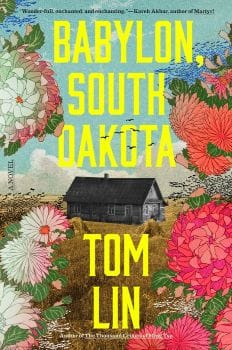
Babylon, South Dakota by Tom Lin
May 26 | Little, Brown and Company | 336 pages
In this strange speculative novel, a Chinese immigrant family living in South Dakota encounters a secret United States government program. After the Air Force builds a missile silo near Mei and Saul’s home with their consent, their daughter Mara develops the ability to communicate with animals, and other weird phenomena ensue. In a starred review, Kirkus refers to “a hard SF twist worthy of Cixin Liu’s The Three-Body Problem (2014),” “ghosts, or at least thermodynamic traces, and hidden chambers, and scheming warmongers and bureaucrats, and a mad Strangelovian colonel,” and “a pleasantly meandering storyline that, against the odds, ties everything together.” Kaveh Akbar writes, “Lin has built this wildly ambitious, deeply strange world with its own ecology and physics and sociology that is also, importantly, our world in all times past, present, and future.”
No God But Us by Bobuq Sayed
May 26 | Harper | 288 pages
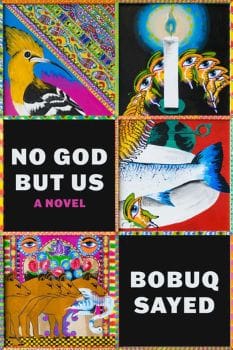
In No God But Us, Bobuq Sayed has crafted a moving exploration of the lives of queer refugees in Istanbul. Mansur is an Afghan man who has fled his home in Tehran after being outed by his grandmother. Upon arrival in Turkey he is robbed, sexually violated, and treated with disdain by his immigration caseworker. Then he meets Leif, a white German man running an aid organization called Peacemeals, who takes Mansur under his wing. They develop a romantic relationship, but Sayed asks us to reckon with whether, given Mansur’s precarious situation, such a pairing can ever be consensual. Meanwhile Delbar, also of Afghan extraction, comes to Istanbul from the US after his mother learns he has been working at a drag bar. He meets Mansur and the two develop an immediate connection. But Istanbul is anything but safe for the queer migrants that seek an entry into Europe through its borders. Sayed depicts the bleak reality of the interminable wait for citizenship status that refugees like Mansur experience, and tempers it with the shining light of queer community, which authoritarianism and institutionalized homophobia can’t extinguish. Read Lisa’s full review of Sayed's novel here.
Pretend You’re Dead and I Carry You by Julián Delgado Lopera
May 26 | Liveright | 336 pages
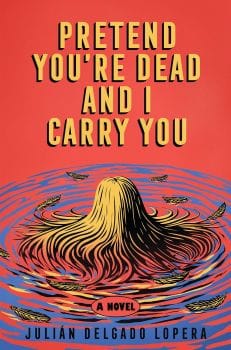
Julián Delgado Lopera’s latest novel follows Valentina, a teenager left living in a Bogotá apartment with her languishing father Ignacio after her mother’s death. “From Ignacio’s dark past emerges the luminous Mamadora Eléctrica, the wise travesti who introduced Ignacio to the city’s queer scene years prior,” reads the publisher’s synopsis. The book, which has gotten a starred review from Publishers Weekly and many enthusiastic author blurbs, seems to be about how Valentina pieces together her father’s previous life and particularly his romantic connection to one man. Quispe López writes for them, “Ultimately, the novel is about what happens when someone rejects their queer destiny — and more importantly, what happens to descendants who are left to grapple with intergenerational suppression.” “I wrote the book I've been wanting to read: A well-earned heartbreak,” Lopera tells People magazine. “Spanglish in quantities never before seen. Third world queerness that vibrates with the rhythms of Colombia. Family dysfunction with a travesti feel.”
Who Even Reads is an independent publication run by two hardworking editorial professionals. We write about books from a liberation perspective, with a socially conscious focus that's both fun and serious, covering mostly new releases. Your donations subsidize what we do. Learn about us.