Witnessing and Resistance in Sarah Bruni's Mass Mothering and ICE-Occupied Minneapolis
The stories of the activist group Mothers United in Mass Mothering are refracted through the lenses of layer upon layer of witnesses. We have seen this same thing playing out in Minneapolis, where people are looking, watching, witnessing.
I was reading an advance copy of Sarah Bruni’s second novel Mass Mothering on January 7 when ICE agents occupying Minneapolis murdered a mother of three, Renée Good, while she and her wife were observing and recording their actions in the community. I began writing this on January 24, as they have killed again, this time a registered nurse named Alex Pretti who was also recording, and stepped in after ICE agents shoved a woman to the ground. Minneapolis, like Chicago where I live, is a sanctuary city—a loose term used to describe a place where local officials do not readily cooperate with federal immigration authorities—home to many, many immigrants. In 2023, it was estimated that 11% of the Minneapolis population was foreign-born, with the majority being Somali, Hmong, and migrants from Latin and Central America. It is impossible to separate the current president’s grudges against Minnesota Governor Tim Walz (who ran as VP on the Democratic ticket in 2024) and Congresswoman Ilhan Omar (also a Democrat, and a Somali American) from the current occupation of Minneapolis by ICE and the federal government’s disinterest in any investigation into the deaths of Good or Pretti. We saw much the same when ICE infiltrated Chicago as a show of Trump’s hostility toward Governor Pritzker.
Mass Mothering is a chilling, ethereal novel about a young woman, A., living in an unnamed American city, presumably New York, who is recovering from a serious medical event—she has had a hysterectomy after cancerous cells were discovered in her womb. She meets a man while out dancing and develops an intimate but platonic relationship with him. She finds in his apartment a book called Field Notes, which turns out to be an anthropological study conducted in an unnamed town in an unnamed country, into the disappearances of boys and young men there. The novel contains extensive passages from Field Notes, largely consisting of interviews with the boys’ mothers. Later, A. travels to the capital of this country after receiving a grant to translate the book. She learns that the mothers have now formed an activist group called Mothers United, which operates out of the capital and engages in regular protest of the government’s disinterest in their plight. She becomes determined to document and continue spreading their stories.
Many of the details in Mass Mothering are kept vague, with the clear intention to universalize. This is effective in that it is very evocative of authoritarianism in Latin and Central American countries (and the United States’ involvement in/installations of those regimes) in particular, but it could easily be taking place anywhere a government terrorizes and neglects.
Field Notes contains the following passage:
“Life in the capital doesn’t preoccupy itself with the problems of the small provincial towns like that of my research site. It’s inadvisable to speak plainly of multinational militarized apparatuses that can be positively correlated to some trends we might want to discuss at some point, so no one is going to say anything even remotely close to that. It’s as easy as shifting focus.”
And later:
“[T]heir mothers had been gathered up with all their fathers in fields as they sat blindfolded on the steps of a nearby cathedral, and the last thing they remember was pushing the flats of their palms into their ears.”
When A. meets up with members of Mothers United, it is made clear that their lives are at risk as a result of their activism: because they won’t stay quiet about what has happened to their sons—what they have witnessed. For the mothers, the issue is personal, because their sons were taken. But while visiting the country where the disappearances took place, A. also learns of the murder of a poet and journalist, Rita Zapo, who had been attempting to tell their stories. The author of Field Notes expresses in the text concerns about his safety as a result of his research. Because everyone knows that in an authoritarian state, looking, recording, and sharing can be dangerous acts. Deemed confrontational. Videos taken moments before their deaths show that both Renée Good and Alex Pretti had their phones out, recording the actions of the ICE agents who had invaded their community. When A. attends a Mothers United protest at the site of Rita Zapo’s murder, she sees that someone has defaced the small monument there with graffiti reading “Terrorist bitch” (which has been crossed out and replaced with the words “Pray for us sinners”). In one of the videos capturing Renée Good’s murder, her killer Jonathan Ross, or possibly another agent, called Good a “fucking bitch” after she was shot in the arm, chest, and head. In the aftermath of the murder, she was branded a terrorist by both Department of Homeland Security Secretary Kristi Noem and the vice president.
The murders of Good and Pretti were meant to send a message not to undocumented immigrants and criminals, the people the DHS claims to be after in Minneapolis, but to those who support them. What the state fails to recognize every time is that people will always keep showing up for their neighbors, for their beliefs, to insist that fascism has no place in their community.
On January 23, 200 faith leaders arrived in Minneapolis with the intention, according to the National Catholic Reporter, “to observe and document the actions of Immigration and Customs Enforcement.” Comments from these observers reflect an increasing national outrage. One remarked, "You can only preach against ICE for so long before God calls you to get out of the pulpit and get to the streets.” Another, after watching ICE agents demand to see proof of citizenship from two women in a strip mall parking lot, said, "I'm becoming radicalized. I'm seeing our nation become more and more fascist before my eyes.”
Renée Good’s widow said in a statement shortly after her wife’s murder, “Renee was a Christian who knew that all religions teach the same essential truth: we are here to love each other, care for each other, and keep each other safe and whole.” Good refers to grappling with her religious faith in a moving prize-winning poem she wrote called “On Learning to Dissect Fetal Pigs”:
"maybe there in-between my pancreas & large intestine is the piddly brook of my soul// it’s the ruler by which i reduce all things now; hard-edged & splintering from knowledge/ that used to sit, a cloth against fevered forehead./ can i let them both be? this fickle faith and this college science that heckles from the back/ of the classroom”
It’s about making room for the soul in a world that is punishing on the body. So is Mass Mothering. A. finds her own shining soul in a project of documentation after her body has revolted against her. As the door closes on motherhood in her own life, she finds herself again as a witness for those who have been robbed of motherhood and left to suffer the interminable grief of never knowing what happened to their sons.
Colleagues and family of Alex Pretti recall him as an immensely kind and helpful person. In the hours after his death, Pretti’s father said: “[Alex] cared about people deeply and he was very upset with what was happening in Minneapolis and throughout the United States with ICE, as millions of other people are upset. He felt that doing the protesting was a way to express that, you know, his care for others.”
The murders of Good and Pretti demonstrate conflicting intentions by the state to both be seen as powerful—powerful enough to kill with impunity—and to prevent further observation.
The narrator of Mass Mothering remarks, poetically, “When my great-grandparents emigrated from four different countries, their shared goal was rapid assimilation. As a result, I am third-generation nothing.” Her point of origin is “miles of cornfields and strip malls.” This is likely meant to be an allusion to the fact that she is white—no other people can assimilate rapidly in the American cornfields.
I'm wary of praising Good and Pretti in a way that evokes white savior narratives, and so I want to be clear that their whiteness is what put them in a position in the first place to take actions that became symbolically powerful on a large scale. Furthermore, their increased visibility and privilege likely played a role in escalating the encounters they found themselves in, as the “authorities” who killed them have probably felt less inconvenienced by the more normalized violent encounters they have been having with non-white people, whom they can more easily arrest or disappear while claiming this is in alignment with their supposed goal.
Many people with family members who have been abducted by ICE agents report having no information about where their loved ones are being held, or if they are in custody at all. People have, of course, died in custody (thirty-two people in 2025), and disappeared. A Minnesota healthcare worker has claimed that people are being released from ICE custody into the woods, in the freezing cold, without adequate clothing. This is reminiscent of the practice of “starlight tours,” which Canadian police have used to murder Indigenous people. The fact that Indigenous people have also been detained in Minneapolis shows the racist, colonialist machinery at the heart of operations still being sold to the general public as having to do with immigration procedure and safety.
Matthew Allen, a rapper who goes by the stage name Nur-D, was detained on January 24 at a protest. A video of his violent kidnapping shows him screaming, “My name is Matthew James Obadiah Allen. I have done nothing at all…I’m a United States citizen … You wanna kill me on the street?” He later told Rolling Stone that he was taken by immigration authorities to an unknown outdoor location and told to remove his clothes, which he refused to do. After repeatedly demanding medical attention, he was eventually put into an ambulance. Up until this moment, he felt certain he was going to be murdered. Allen’s arrest was filmed by Jon Farina, who works for the independent journalism outlet Status Coup. (Farina suffered a minor injury at a Jan 11 protest outside the ICE facility in Minneapolis after he was hit with a pepper ball; he and the other journalists at Status Coup have been doing excellent and fearless work on the ground there.) This incident with Allen, who is Black, shows evidence of routine violence happening to non-white people on a wider scale, a violence quieter and more mechanized than the killings of Good and Pretti. In Allen's case, his place as a known artist in the community and the visibility from the reporting on his abduction may have saved his life.
On January 30, Don Lemon and an independent journalist named Georgia Fort were arrested in conjunction with covering a protest that happened in a church two weeks earlier. (Protesters targeted Cities Church because the pastor works for ICE as a field director.) Lemon recorded the protest and interviewed the pastor. He is charged with “conspiracy against right of religious freedom.”
The absurd, bullying legal action taken against Lemon and Fort by an administration that has shown itself to be racist cannot be separated from the fact that they are both Black. Their arrests are also an example of the state suppressing the act of observation by people who practice it in an official capacity. It is worth highlighting the importance of this kind of observation, and also the strength and courage of all the unofficial witnesses who put their bodies, and their phone cameras, between the state and their neighbors.
Darnella Frazier was 17 years old when she filmed Derek Chauvin kneeling on George Floyd’s neck, just six blocks from where Renée Good was shot. Frazier’s ten minute cell phone video of the murder undoubtedly informed the jury’s decision to convict Chauvin on all three counts he faced for Floyd’s murder. She expressed bystander’s guilt at his trial, remarking, “It’s been nights I stayed up apologizing and apologizing to George Floyd for not doing more and not physically interacting and not saving his life.” Multiple other bystanders filmed as well, and at least one tried to intervene. It is traumatizing to witness such an event, brave to record it, and even braver to allow this record to be circulated with your own name, to stand up in court and say, “This happened, I saw it, and it’s unacceptable.”
Alex Pretti’s murder was recorded by, among others, a woman named Stella Carlson, who can be identified in other videos by her pink coat. She filmed the closest angle and her video has been used to refute the initial defenses brought by the Trump administration—that Pretti brandished a gun, that he approached the agents with violent intent. Her video shows a man directing traffic, then stopping to help the woman who has been knocked down, then being executed in the street. (It is interesting that Alex Pretti’s last words may have been “Are you OK?” and Renée Good’s, “I’m not mad at you.” It is impossible to view these people as violent instigators.)
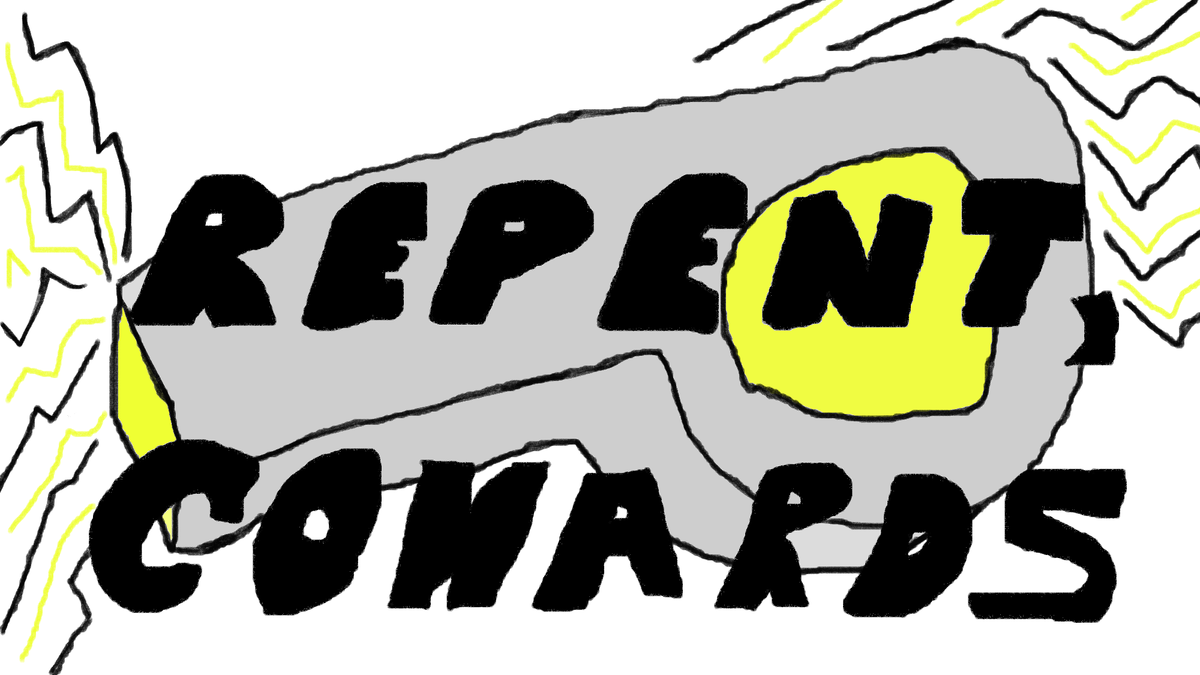
Mass Mothering features a subdued scene in which A. visits the headquarters of Mothers United, and the women are cross-stitching a massive tapestry that reads “REPENT, COWARDS.” It’s a quiet scene, and one that stuck with me, in part because it shows the steady resolve of these mothers over years, decades even, to get justice for their boys. A. is struck with sadness by their stories, but she is also inspired. We see the mothers and their perseverance, their protest through A., who first sees it through the eyes of the author of Field Notes, their stories refracted through the lenses of layer upon layer of witnesses. We see this same thing playing out in Minneapolis, where people are looking, watching, witnessing. Renée Good was present that day on Portland Avenue to watch and document the intruders in her community. We all watched the video of her execution and in the days that followed, this event drew more and more witnesses to Minneapolis.
It can feel like the world is full of unrepentant cowards—because they might be the loudest voices in the room, because nothing seems to be done to stem the tide of authoritarian state violence, whether carried out by its institutions or its armed, jackbooted foot soldiers. But Minneapolis, like so many other American cities, is replete with brave people who won’t let the fabric of their community be torn by intimidation and violence. Outside the Whipple Federal Building in Minneapolis where those detained by ICE are held, crowds gather every day to support the kidnapped, to give them food and shelter and phone calls. When the whistles are blowing on the street to indicate the presence of ICE, people run toward the sound, with their eyes and their cameras and their voices. Minneapolis and Chicago are sanctuary cities for immigrants but also for people born into more conservative communities across the Midwest and the South. New York and LA are seen as liberal meccas during conservative administrations, but to thousands of people of color, queer, trans, and disabled people—others living on the margins—Minneapolis and Chicago are the more accessible and affordable options. Many of us are ready to do whatever is necessary to protect our neighbors in part because of our own fragility and precarity, and because we see our neighbors as an intrinsic part of the security we’ve found in these safer spaces. Without relationships like these, a place is just a body with no piddly brook of a soul.
As of the time of publication, the Trump administration has announced that the ICE surge in Minneapolis is ending, but we assume activity there is continuing until hearing otherwise from those on the ground, and many people who have been detained still need help regardless. You can donate to the Women's Foundation of Minnesota Immigrant Rapid Response Fund to support the urgent needs of immigrant and refugee communities in the area.
Who Even Reads is an independent publication run by two hardworking editorial professionals. We write about books from a liberation perspective, with a socially conscious focus that's both fun and serious, covering mostly new releases. Your donations subsidize what we do. Learn about us.