A Little Less Greek Tragedy, a Little More Genesis: The Book of Chuck by LaToya Watkins
With The Book of Chuck, Watkins cements her place as an essential storyteller of Black life in America and one of Toni Morrison’s heir apparents.

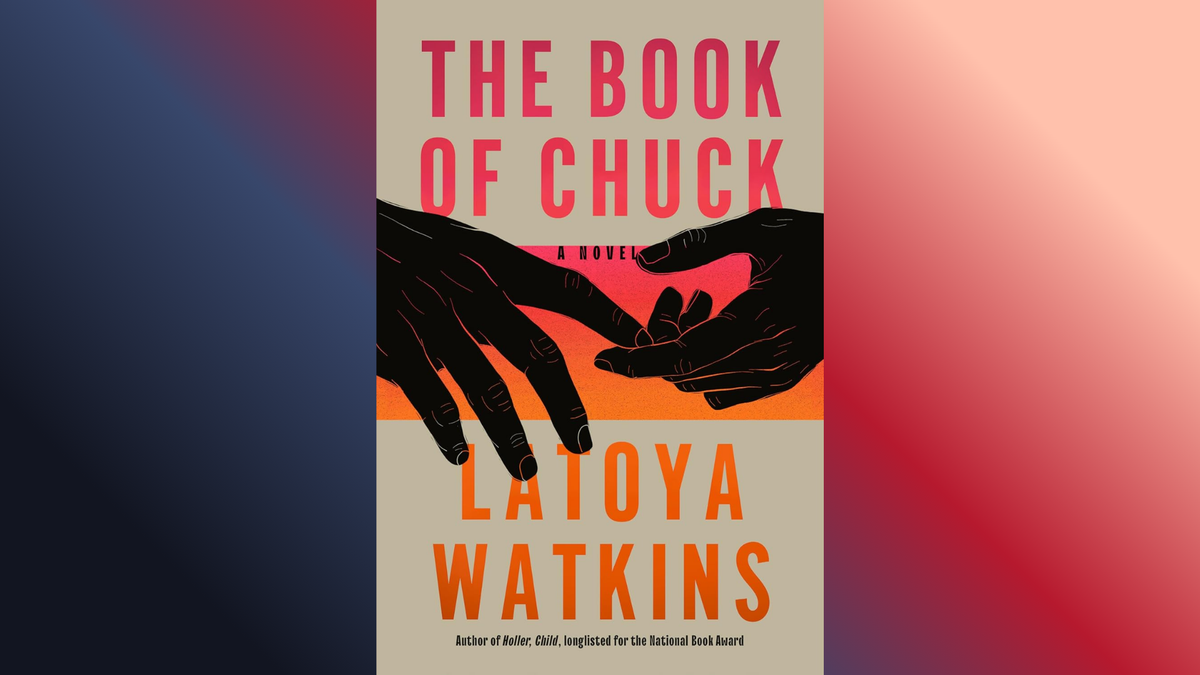
LaToya Watkins’ second novel The Book of Chuck is aptly named, in that questions of God and organized religion permeate the text, but also because both here and in her first novel Perish, Watkins presents a very biblical way of looking at the world, particularly around the duty of care people owe one another.
Like Perish, this is a generational story. We begin with Nannie who, as a baby in 1936, predicts her father Atlas’s lynching. In this family, prophecy is a genetic inheritance for some, but not all. Nannie’s son Walter, who goes by Chuck, can sense when someone will die soon by laying hands on them. Chuck was abandoned by Nannie (who was abandoned by her own mother after the lynching) and raised by distant relatives. After a run-in with the law he meets Lettie, and over the course of several years of an on-again-off-again relationship marred by Chuck’s infidelity, the two have three daughters: Tarika, Nikki, and Baby.
The novel’s timeline encompasses the 1970s, when Chuck and Lettie get together and start having children; the 1990s, when Baby is a teenager living with her mother and her stepfather, Swan, after Chuck's untimely death; and the early 2000s, when Baby is a young woman working as a counselor, attempting to rescue Tarika from an abusive relationship and dealing with her own familial and religious trauma. Each timeline is a well-rounded narrative in itself, and in combination they create psychologically compelling portraits of the characters, with Chuck, Baby, and Lettie getting the most expansive treatment.
In particular, as she did so expertly with Perish, Watkins demonstrates here the firm, unyielding hold generational trauma can have on a person, and how traumatic experiences are often reproduced in similar patterns down the line of inheritance. For Nannie, Chuck, and Baby, this inheritance has a literal manifestation: the gift (or curse) whereby they can see a future death. Each suffers tremendously for it, demonstrating how difficult it is to break the chain of trauma. The gift makes love and parenting complicated, at times impossible, for Nannie and Chuck, and Baby has avoided having children of her own (or really any close attachments) so she can never harm someone else the way that she has been harmed.
Chuck and Lettie are a tragic pairing; their love is genuine but Chuck’s trauma prevents him from being the partner Lettie needs. Women, drugs, and booze provide necessary distractions for Chuck, who is tortured by the profoundly disturbing experience of seeing death. There is a whiff of Greek tragedy here, as the gift is Chuck’s fatal flaw, without which he might have had a normal life with the woman and daughters he loved (which was his most sincere ambition).
Watkins treats Christianity with a Morrisonian ambivalence. God is a beacon to her characters—a salvation and potential end to their suffering. But institutional religion is a potential threat, particularly as a site of racist mistreatment. When Lettie and Swan take a teenage Baby to East Texas to live on a farm with a doomsday cult, it’s clear the other members view the family as inferior because they are Black (in ways that become increasingly harmful and disturbing over time). Church is a place where Lettie and Baby feel safe, until it isn’t. Baby ultimately flees to her older sister’s house, leaving Lettie behind, and both mother and daughter are tortured by guilt over a sort of mutual abandonment—Baby feels like she never should have left Lettie alone on the farm, even though she was too young to really help her, while Lettie comes to wish she had never taken Baby there in the first place. Watkins also critiques Christianity as a patriarchal institution—the cult draws from Christian doctrine in its teachings and practices, which include establishing polygamy and decision-making as the realm of men, while women are expected to obey, serve, and otherwise accept a position of inferiority.
Some may bristle at Watkins' black-and-white morality, where those who commit the greatest sins against the vulnerable and against those they are supposed to love receive the harshest punishments. Even as she shows the reader how the story’s more objectionable characters came to be the way they are, how abuse and neglect begets abuse and neglect, there is little redemption on offer to transgressors. For those who read Perish and were perhaps shocked by the ending, rest assured Chuck is a little less Greek tragedy, a little more Genesis. But both books have a very satisfying internal moral logic that is often missing in the real world.
With The Book of Chuck, Watkins cements her place as an essential storyteller of Black life in America and one of Toni Morrison’s heir apparents. While tragedy abounds in this family’s story, Watkins leaves plenty of room for grace, and for the possibility of breaking the cycle for the youngest generation.
Who Even Reads is an independent publication run by two hardworking editorial professionals. We write about books from a liberation perspective, with a socially conscious focus that's both fun and serious, covering mostly new releases. Your donations subsidize what we do. Learn about us.