(Gay) Quotes from My Life and Other Unfinished Business: Queering Dolly Parton's 1994 Memoir
I bring you here ten of my favorite quotes and anecdotes from this remarkably funny and moving story of Dolly’s life, as she chose to tell it. She is magnanimous and generous, and she gives away exactly as much as she wants to and no more.
When Dolly Parton died on August 25, I was surprised at the intensity and immediacy of my grief. I hadn't thought about Dolly very much in years, and took her presence in this material world for granted. In fact, she is a load-bearing figure from my childhood who (along with Peewee Herman, Elvira, and Cyndi Lauper) was a crucial role model for the kind of weird I knew I was even in my earliest memories. My mother’s side of the family is from Eastern Kentucky and my grandparents and my mom all adored Dolly when I was growing up. Visits to her theme park Dollywood and its environs were regular topics of conversation, and I remember Dolly's album Trio with Emmylou Harris and Linda Ronstadt on regular rotation in my house. The song "9 to 5" was literally everywhere in the 1980s, and I also remember watching Dolly's variety show that aired in 1987, and in particular her on-screen chemistry with Miss Piggy from The Muppet Show.
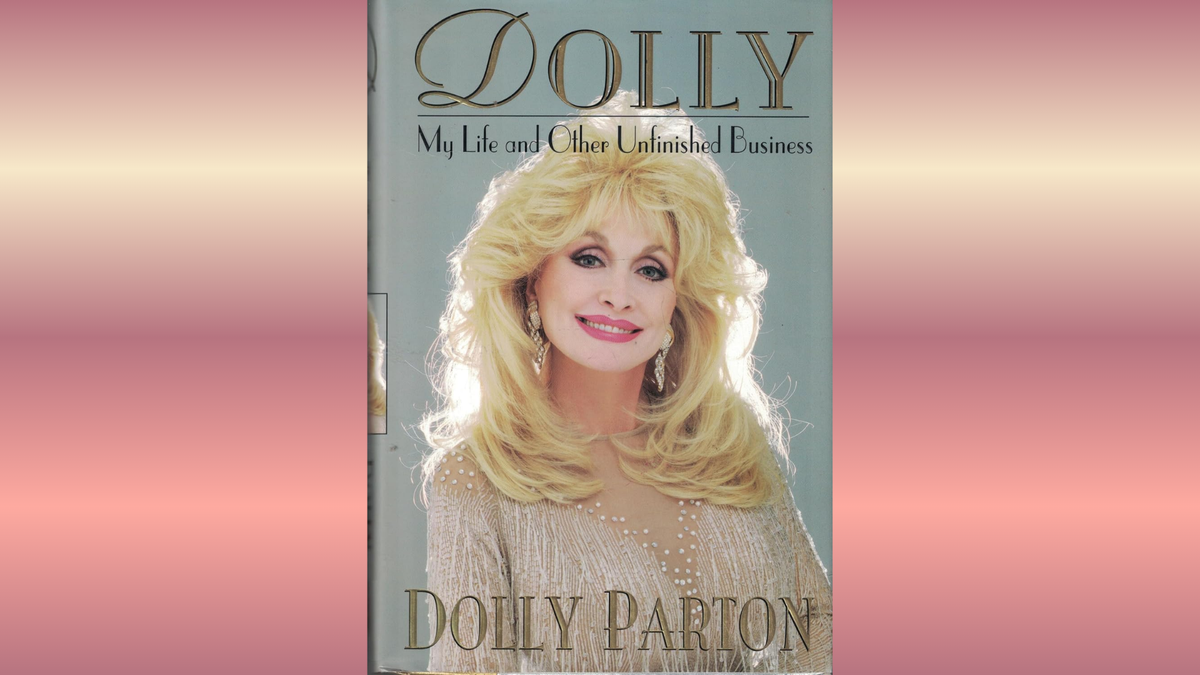
This variety show, which Dolly Parton did not enjoy making, and many other topics, are discussed candidly in the 1994 memoir Parton published with HarperCollins called Dolly: My Life and Other Unfinished Business. Unbelievably, it has been out of print for at least twenty years, but fortunately my local library had a copy (and maybe yours does too!). So I bring you here ten of my favorite quotes and anecdotes from this remarkably funny and moving story of Dolly’s life, as she chose to tell it. Of course, this is still a celebrity memoir and therefore selectively narrated and edited to make the subject shine—not a difficult feat in this case at all, as Dolly Parton is possibly one of the most luminous people to ever live. She is magnanimous and generous, and she gives away exactly as much as she wants to and no more.
It is worth keeping in mind that this book was published in 1994 and it reflects Dolly's fraught relationship to food and her own body at that time (after being mocked relentlessly in the tabloids for her weight). Thus there is some internalized fatphobia in the book and discussion of dieting that we would now classify as explicitly encouraging disordered eating. And I do mean explicit, so if this is a trigger, please be advised.
Now, on to the ten best moments of Dolly: My Life and Other Unfinished Business!
Memorable Quotes and Anecdotes from Dolly Parton's Memoir
Uncle Bill Steps in Front of a Bus
“Neither of us ever gave out as long as something was happening or at least had the look of something that might happen. Nothing mattered to Billy except his work. I knew exactly where he was coming from. That is why I understood when he stepped in front of a bus in Knoxville.”
In her early years, Dolly’s uncle Bill Owens, also a musician, took her under his wing, driving her from her hometown of Sevierville to auditions, performances, and recording sessions in Knoxville. One of the most charming things about My Life and Other Unfinished Business is Dolly’s expression of admiration for the close friends and family members who have supported her. It’s clear she had an exceptional gift (or exceptional luck) for finding people who shared her passion—enough to walk in front of a bus to try to get an insurance settlement check for gas money to keep driving her to auditions. This quote reads like a joke but Dolly lets it lie without much fanfare and does not mention whether or not Bill actually got that check.
On Judy Ogle
“Whichever team had Judy on it was pretty much assured of [winning]. She could knock a softball a mile, sink a basketball from anywhere on the court, and run like the wind. She would always pick me for her team, and that made me feel good because most of the other girls wouldn’t.”
Dolly and Judy Ogle were best friends since childhood, and during adulthood were frequently the subject of tabloid rumors claiming that they were involved in a queer relationship. Dolly denies these rumors directly later in the memoir. I have no further comment on this quote, in which Dolly describes Judy’s high school athletic prowess.
Dolly’s First Recording Session at RCA/Porter Wagoner
“In my rush to get to the studio that day, I forgot one basic element of driving—braking. I arrived at the RCA studio on Music Row and plowed right into the side of the building. Bricks were still falling onto the hood of the car as I walked nonchalantly into the recording session as if nothing had happened. When we took a break a little later, the men went outside to have a cigarette and noticed my car stuck in the wall. They commented on it, but I never did say anything or confess that it was my car.”
Dolly really knows how to paint the picture of a scene to make you feel like you are there with her, reliving the memory, as in this moment, where she recalls wrecking her brand new car on the first day she was recording for RCA. This was the record deal she got through Porter Wagoner, her (in)famous partner and mentor in the late 1960s and early ‘70s. Parton and Wagoner were also the subject of tabloid gossip, particularly because their relationship was known to be contentious. When she left Wagoner’s television show after her contract ended, he sued her for $3 million, claiming that her success was a result of his guidance. Parton discusses the lawsuit and settlement in this memoir but, keeping it classy above all else, she does not relate many details about their years-long feud or talk as much shit as would presumably have been warranted based on this paternalistic, misogynist bullshit lawsuit. Dolly is effortlessly slick, taking adorable anecdotes like this all the way to the bank.
Meeting Sandy Gallin
“‘Are you Sandy?’ I asked, halfway hoping he wasn’t.
He nodded and said, ‘You’ve got to be Dolly.’
‘I guess if one of us has to be, it might as well be me,’ I said as I got into the car.”
Dolly started working with her manager Sandy Gallin in 1976. It was the beginning of a twenty-five-year professional relationship and lifetime friendship. The start was inauspicious, as she describes in this scene; they had a planned dinner date, but while Sandy was prepared for a quiet evening in at his home talking business, Dolly had dressed for a flashy night out (the only way she knew how). Wearing “a white outfit with sparkles and spandex and fringe on the sleeves” as well as “the biggest hair I could afford up to that point,” she was dismayed to see Sandy laughing at her as she neared his vehicle. Fortunately, Sandy was a flashy person in his own way, and this turned out to be another relationship of kindred spirits. This quote captures Dolly’s fantastic wit, for which she is very well known (and brings to mind one of her all-time classic lines, “It costs a lot of money to look this cheap”).
The Value of Self-Awareness
“Although I look like a drag queen’s Christmas tree on the outside, I am at heart a simple country woman.”
This is possibly my favorite quote in the memoir, which Parton drops to explain why she did not enjoy performing at a glamorous Las Vegas stage show in 1981. Putting Dolly Parton in such a loud, brightly colored, gaudy environment is like putting a hat on a hat. Totally unnecessary, but also probably amusing and I would have loved to see it.
Dolly and Judy Ogle Watch a Porno
“You touch me one more time, you son of a bitch, and I’m gonna blow your nuts off!”
This story was familiar to me, so I think most likely Dolly told it on the late night circuit. Shortly after she got famous on Porter Wagoner’s show, Dolly and Judy Ogle traveled to New York City for a night of fun debauchery, just two heterosexual gals on the town. Dressed like “a trash queen” with “big hair, gaudy jewelry, and clothes too tight,” with .38 caliber handguns in their bags “for protection,” they decided to visit a porno theater. Afterwards, a man approached, mistaking them for sex workers and propositioning Dolly. When he wouldn't take no for an answer, she threatened to shoot his dick off, much to Judy's amusement. As he ran off, Dolly wheeled around to yell at her, “Look, you laugh one more time, and I’ll shoot your nuts off too!”
Fun-Loving Wife
“But I just couldn’t let him get one on me without some kind of retaliation. What kind of fun-loving wife would I be? I casually walked over to a cop who was right at the front of the stage. I leaned down to him and said, ‘That man back there in the white shirt is not a part of our group. Somebody has been stalking me, and it might be him.’”
Dolly talks a lot about her relationship with her husband Carl in My Life and Other Unfinished Business, and like her relationship with Judy Ogle, much has been written about her marriage in the tabloids. I love gossip and recently had to block someone on Twitter because they got so mad about me speculating that Dolly might have maybe been a little bit bisexual on the side. I do think she and Carl had a wonderful marriage, whether it was an open one or not (it was). In one of many charming anecdotes, she recalls Carl playing a practical joke on her by getting up on stage with no warning and singing along with her backup singers. Not to be outdone by his prank, she responded by asking the security team to arrest him. He served eight years at Leavenworth.
How to Be Happy
“You have to work at being happy, just like you have to work at being miserable.”
With her naturally bubbly personality, it is not easy to imagine Dolly Parton being unhappy, but she certainly had unhappiness in her life, even after she was very rich. Toward the end of the memoir, she is more direct in giving the reader advice, and it is surprisingly (or maybe not so if you know how perceptive and savvy she was) apt. This line struck me as something of an epiphany. Both happiness and misery are cultivated in some ways, and we all choose which emotions to invest in. While the situation might be more complicated the more marginalized a person is, this quote reminded me that I can still be happy, and that no one is going to make that happen for me but ME. Thanks Dolly!
$$$!!
“Every day I count my blessings. Then I count my money.”
This is another pithy Dolly-ism that sounds superficial but holds a deeper meaning. People joke about Dolly’s ubiquitous brands and products—one Twitter user noted, “that lady loved Tennessee, Carl Dean, sequins, and a check.” There are Dolly Parton brand cake mixes, fragrances, “home essentials,” maple syrup, frozen dinners, the newly launched Dolly’s Dolls, and soon to be Dolly Parton coffee blends. It would be a little obnoxious were it not for Parton’s devotion to philanthropy. Imagination Library has donated hundreds of millions of books to children. She gave millions of dollars to disaster relief in her home state of Tennessee. Millions to public health research during the beginning of the Covid-19 pandemic. College scholarships. Dollywood has provided Sevier County, the impoverished part of Eastern Tennessee where Dolly grew up, with 23,000 jobs. All employees, even seasonal hires, receive full benefits, including free college. I think more than money, Dolly liked to work, and she liked the fruits of her labor to go to people who needed it—particularly people who came from where she came from and didn’t have the same luck and opportunities she did.
GAY
“Well, I believe in ‘human rights’ and the Scripture, ‘Judge not, lest ye be judged.’ I have many gay friends who I love dearly. I have also lost some very special friends to AIDS. I believe that being gay is something you are, not something you do.”
Dolly has always been a friend to the gays (and the queers, bisexuals, gender nonconforming people of all kinds, etc.), and was making explicit assertions of this friendship all the way back in the early 1990s when it was much less common. She also refers in the book to Jason Pirro, her friend and driver, a trans man whose gender transition occurred while in her employ, and of whom she was enthusiastically supportive. This quote fully humanizes queer people, and demonstrates how Dolly aligned her approval with her Christian faith: she did not see being gay as an act to be equated with sin, but as an attribute a person was made to have, by God.
Who Even Reads is an independent publication run by two hardworking editorial professionals. We write about books from a liberation perspective, with a socially conscious focus that's both fun and serious, covering mostly new releases. Your donations subsidize what we do. Learn about us.