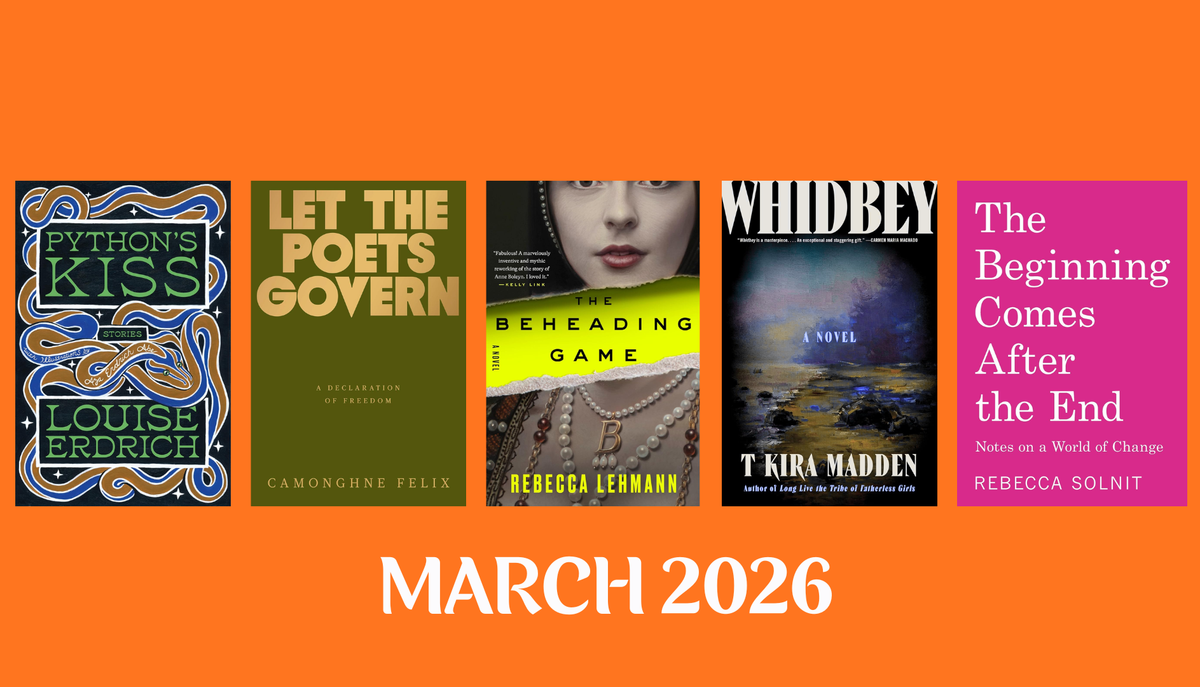
Books We Like the Looks Of: New Releases in March 2026
Check out five books we're looking forward to that are coming out in March, including new releases from Rebecca Solnit and Louise Erdrich.


In an essay for The Paris Review in 2018, Alexander Chee wrote, “Only in America do we ask our writers to believe they don’t matter as a condition of writing. It is time to end this.” The name of this website, Who Even Reads, was conceived as a mockery of a mockery, a straightforward expression of disdain for the suggestion that literature and books are irrelevant to the general public that shouldn’t need to be qualified with an explanation. As we look ahead to March books, the first two on our list below speak against the particular American anti-intellectual and anti-art tradition highlighted in Chee’s essay, or, perhaps more accurately, pointedly ignore it. We’re glad for the existence of these books amid the current political landscape and its violent encroachment on human lives, a continuation of past violences, along with the rest of the titles we write about here. And we hope to be a part of the ending of the idea that writing and writers don’t matter, an idea that already ended for many of us personally a long time ago, that continues to end because the alternative is unsustainable, that is ending all the time.
Good-Looking Books Coming Out This March
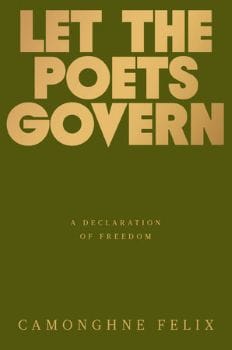
Let the Poets Govern by Camonghne Felix
Mar 3 | One World | 192 pages
“I do not and cannot think of survival in concrete terms, because the world we’ve created and inherited does not want us to survive,” Camonghne Felix writes, “Survival for the human being necessitates abstraction, it requires that we see outside the limitations of what is considered real.” Felix, a poet who has worked in politics, including as a speechwriter for Elizabeth Warren, presents poetry and language here as a necessary tool for change. Let the Poets Govern encompasses Felix's recollections of the American political landscape of the past decade through her own experiences, examples of erasure poems created from legal documents, and an argument for how Black radical traditions and poetry can lead the way to higher societal and interpersonal standards, and, ultimately, survival. An excerpt is available on the publisher’s website at the link above (the “Look Inside” option lets you read beyond the “Prelude” and into the first chapter).
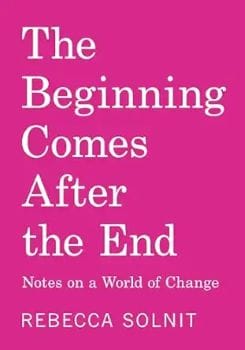
The Beginning Comes After the End by Rebecca Solnit
Mar 3 | Haymarket Books | 160 pages
Rebecca Solnit is one of our best thinkers when it comes to making connections across recent history and current events to create a narrative that might not be as immediately legible to the rest of us. The Beginning Comes After the End is a “long essay in the form of a short book” in which Solnit crafts an optimistic narrative of progress in the American political and social spheres spanning the mid-20th century to the present. This includes a close reading of the broader story of civil rights development, as well as more recent and granular events like land-back grants to Indigenous organizations and communities and the fast-growing adoption of renewable energy. While it’s important to keep in mind that progress occurs in fits and starts and that there is a long way to go when it comes to creating a more just and equitable United States (if such a thing, in name, is possible), Solnit’s analysis here is both intellectually rigorous and daringly hopeful. We'll be covering this book in greater depth soon.
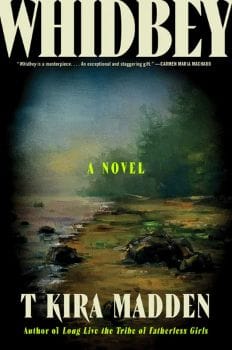
Whidbey by T Kira Madden
Mar 10 | Mariner Books | 384 pages
This debut novel from T Kira Madden, author of the memoir Long Live the Tribe of Fatherless Girls (2019), opens with a quote from Patricia Highsmith’s Strangers on a Train (1950) that sets an eerie and intriguing tone: “But there were too many points at which the other self could invade the self he wanted to preserve, and there were too many forms of invasion.” The book’s title is the name of an island in Puget Sound where the main character, Birdie Chang, travels to escape the publicity surrounding a memoir by a woman named Linzie King about a man, Calvin Boyer, who molested her when she was a teen—Calvin also molested Birdie when she was a child and the memoir includes details about his victims. While on her trip, Birdie tells a man she meets about Calvin. This man offers to kill Calvin, and later, someone really does murder him. The first few pages, which you can read in an excerpt on the publisher’s site, set the stage for a layered, intricate story with a mood of quiet suspense. Madden's novel has already been highly praised in multiple reviews, and Kirkus describes it like this: “Moving among multiple perspectives that showcase a gift for creating in-depth, psychologically complex character portraits, Madden weaves a dark, propulsive narrative. As unrelenting as it is probing and compassionate … A searingly original novel that examines the impact of sexual trauma on the human psyche.”
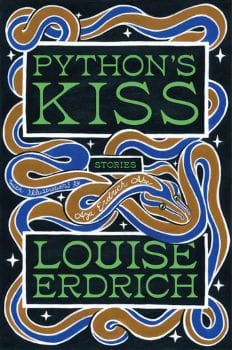
Python’s Kiss by Louise Erdrich
March 24 | Harper | 240 pages
Interestingly, this is only Louise Erdrich’s second story collection. According to Kirkus, eleven of the stories in her first collection The Red Convertible: Selected and New Stories, 1978-2008 (2010) were eventually expanded into novels, of which she has published nineteen total. Read that again if you didn’t quite absorb it. Presumably, this means one could also theoretically be glimpsing future novel excerpts in this collection. In her piece on Long Covid in fiction, Lisa wrote about the current absence of the realities of Covid—the actual experience of getting sick and negotiating a world of illness—in novels. While there was more of this in literature and media in general following the initial lockdown phase of the pandemic, it’s worth noting that Erdrich’s The Sentence, which came out in 2021, deals directly with Covid as a real, physical threat. This book also engages with the atmosphere in Minneapolis following George Floyd’s murder.
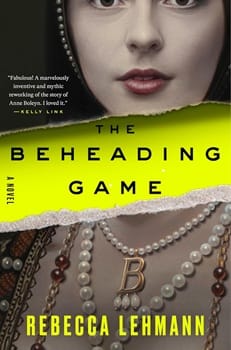
The Beheading Game by Rebecca Lehmann
Mar 24 | Crown | 320 pages
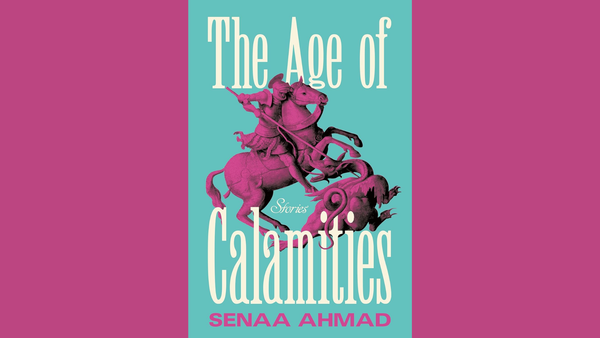
We may have started looking at this book because it was blurbed by Kelly Link, the memory isn’t clear. There’s no shortage of fiction about Anne Boleyn, as we’ve seen recently in Senaa Ahmad’s The Age of Calamities (which also bears some similarities to Kelly Link’s fiction), but that doesn’t mean that this reworking in which the beheaded royal rises from the grave to go on a revenge quest isn’t worth seeking out, especially if you’re like Lisa and have an embarrassingly avid interest in the Tudors. Kirkus compares it to Hilary Mantel’s Wolf Hall (2021) and calls it “Brilliantly imagined, stylishly written, satisfyingly plotted, full of delicious surprises: all in all, hella fun.” Like with Let the Poets Govern and Whidbey, you can find an excerpt to read at the main link above.
Who Even Reads is an independent publication run by two hardworking editorial professionals. We write about books from a liberation perspective, with a socially conscious focus that's both fun and serious, covering mostly new releases. Your donations subsidize what we do. Learn about us.